Introduction
In Hindu astrology and Vedic tradition, few doshas carry as much weight as Sarpa Dosha — the affliction caused by the curse of serpents. Across Karnataka, Tamil Nadu, Kerala, and Andhra Pradesh, thousands of families visit Srirangapatna every year to seek relief from this powerful dosha through authentic Vedic rituals.
If your family has been struggling with delayed marriages, infertility, skin diseases, recurring nightmares involving snakes, or a series of misfortunes with no clear explanation, Sarpa Dosha may be the root cause.
This complete guide explains what Sarpa Dosha is, how it differs from Sarpa Samskara, the symptoms to look for, the full ritual procedure, and how you can book a trusted purohit in Srirangapatna.
What is Sarpa Dosha?
Sarpa Dosha (also called Naga Dosha) is a karmic affliction that occurs when:
- An ancestor killed a snake — particularly a cobra — either intentionally or accidentally
- A serpent was harmed or its eggs were destroyed on your ancestral property
- Snake worship or Naga Puja that was traditionally practiced in your family was discontinued
- A serpent deity’s shrine (Naga Katte) was destroyed or disrespected on family land
In Vedic astrology, Sarpa Dosha appears when Rahu and Ketu form specific combinations with other planets in the horoscope — particularly in the 5th house (children) or 7th house (marriage).
Serpents (Nagas) are considered divine beings in Hinduism, associated with Lord Shiva, Lord Vishnu, and Goddess Shakti. Harming or disrespecting them — or failing to honor them as your ancestors did — creates this powerful negative energy that passes down through generations.
Sarpa Dosha vs Sarpa Samskara — What is the Difference?
Many people confuse these two rituals. Here is the key difference:
Sarpa Dosha Pooja is performed to remove the astrological Dosha (affliction) present in an individual’s horoscope caused by Naga-related karma. It focuses on planetary alignment and seeks to pacify Rahu, Ketu, and the Naga devatas.
Sarpa Samskara is a specific ritual performed when a snake — especially a cobra — was killed on your property or by a family member. It is essentially a last rite performed for the killed serpent, treating it with the same respect as a departed soul, to remove its curse from the family.
In short — if your horoscope shows Sarpa Dosha, you need Sarpa Dosha Pooja. If a snake was physically killed by your family, you need Sarpa Samskara. In many cases, both are recommended together.
Symptoms of Sarpa Dosha
How do you know if you or your family is affected by Sarpa Dosha? Look for these signs:
In Health:
- Recurring skin diseases, especially rashes and eczema
- Unexplained fever or chronic illness
- Mental anxiety and disturbed sleep
In Dreams:
- Repeated dreams involving snakes — being chased, bitten, or surrounded by serpents
- Dreams of snakes entering or living in your home
In Family Life:
- Delayed or broken marriages despite good horoscope matches
- Repeated miscarriages or difficulty conceiving
- Children facing unexplained health problems
- Conflicts and misunderstandings within the family
In Astrology:
- Rahu in the 5th house or Ketu in the 7th house
- Afflicted Lagna with serpent-related planetary combinations
- Astrologer specifically identifies Sarpa/Naga Dosha in your chart
If you identify with three or more of these signs, it is strongly recommended to consult an experienced purohit and consider performing this ritual.
Why Srirangapatna is Sacred for Sarpa Dosha Rituals
Srirangapatna holds deep significance for Naga worship and Sarpa-related rituals for several reasons:
The Cauvery River flowing around the island town is associated with Naga devatas in Vedic scriptures. Rituals performed on its banks are believed to directly reach the serpent deities and ancestors.
The presiding deity Lord Ranganatha (Vishnu) rests on Adishesha — the divine serpent king — making this sacred town one of the most powerful places in South India for Naga-related poojas and appeasements.
The experienced purohits of Srirangapatna have preserved authentic Naga Pooja traditions passed down through generations, ensuring rituals are performed with complete Vedic precision.
Sarpa Dosha Pooja — Full Procedure
The ritual is performed by an experienced purohit and typically completed in one day. Here is what to expect:
Sankalpa The ceremony begins with a sacred resolve where the performer states their name, lineage, gotra, and intention before the fire and the purohit.
Ganapathi Pooja Lord Ganesha is worshipped first to remove obstacles and ensure the ritual proceeds without interruption.
Navagraha Pooja All nine planetary deities are worshipped with special emphasis on Rahu and Ketu — the shadow planets responsible for Sarpa Dosha in the horoscope.
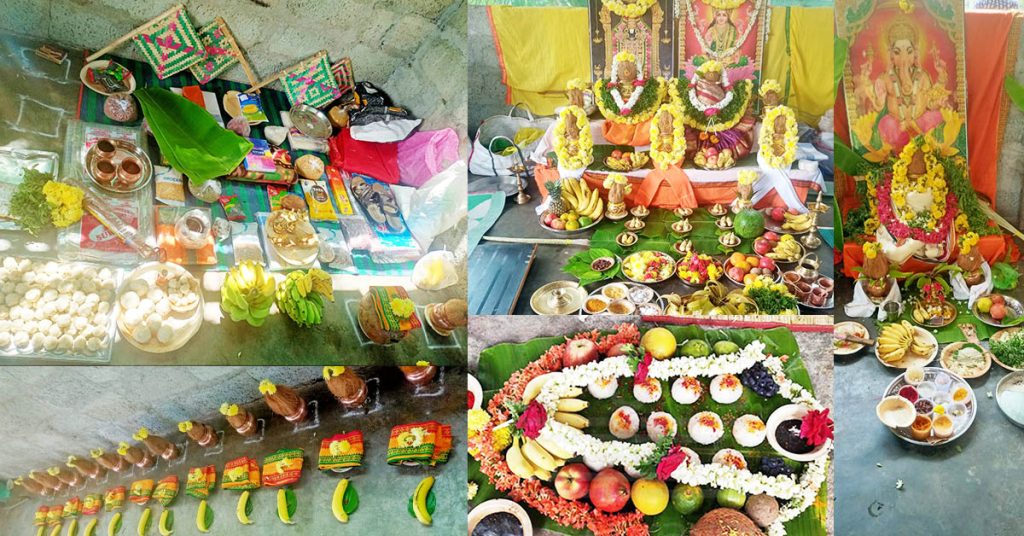
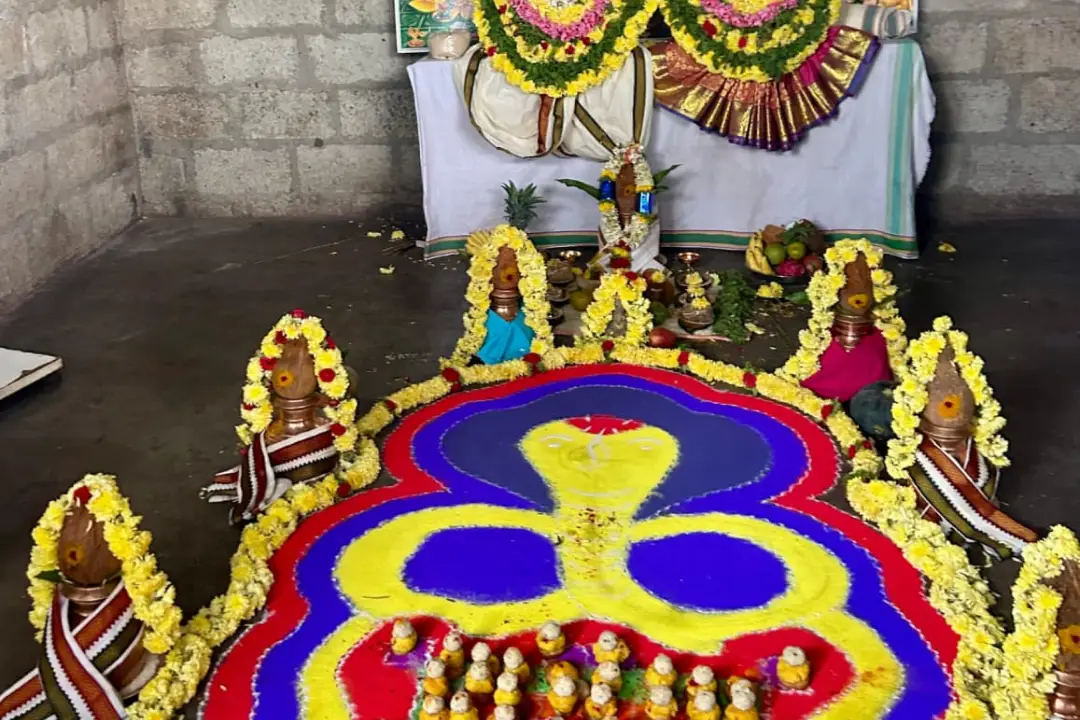
Naga Pratishtha (Invocation of Serpent Deities) Naga idols or images are ritually installed and invoked with Vedic mantras. Milk, turmeric, and flowers are offered as an act of reverence and apology to the serpent deities.
Sarpa Sukta Chanting The purohit chants the sacred Sarpa Sukta from the Atharva Veda — ancient hymns specifically composed to appease and honor serpent deities.
Abhisheka (Ritual Bath) The Naga idol is bathed with Panchamrit (milk, curd, honey, ghee, sugar) and then with sacred Cauvery River water while mantras are chanted.
Tarpana (Water Offering) Water offerings are made to the Naga devatas and affected ancestral lineage to seek forgiveness and blessings.
Homa (Sacred Fire Offering) Offerings of sesame, ghee, and specific herbs are made into the sacred fire with Naga-related Vedic mantras to purify the family karma.
Concluding Prayer and Prasad Distribution The ritual concludes with prayers for health, prosperity, and fertility, followed by distribution of prasad to all attending family members.
Sarpa Samskara — Full Procedure
When a snake has been killed by a family member or on family property, Sarpa Samskara provides it with a proper Vedic last rite. The procedure includes:
- Creating a symbolic representation of the killed serpent
- Performing Jala Pooja (water ritual) on the Cauvery River
- Chanting Naga mantras asking for forgiveness
- Offering milk, flowers, and turmeric to appease the serpent’s spirit
- Performing a small Homa to purify the ancestral karma
- Conducting Tarpana in the name of the serpent’s soul
This ritual treats the killed serpent with the same reverence as a departed ancestor, ensuring its spirit finds peace and the curse is lifted from the family.
What to Bring for the Ritual
Your purohit will arrange all the main Samagri. However, the performer should bring:
- Fresh white dhoti and clean clothes for changing after the ritual
- Fruits — especially bananas and coconuts
- Turmeric powder and kumkum
- Flowers — particularly white flowers and Nagalinga flowers if available
- Milk in a clean container for Abhisheka
- Be prepared to observe a vegetarian diet on the day of the ritual
Auspicious Timings for Sarpa Dosha Pooja
The following days are considered most powerful for performing this ritual:
- Naga Panchami — the most auspicious day of the year dedicated to serpent worship (July–August)
- Amavasya (New Moon Day) — every month
- Mondays — sacred to Lord Shiva, under whose protection Nagas reside
- Ashlesha Nakshatra days — directly associated with Naga devatas
- Any date recommended by your purohit based on your individual horoscope
Cost of Sarpa Dosha Pooja in Srirangapatna
The cost depends on whether you are performing Sarpa Dosha Pooja alone, Sarpa Samskara alone, or both together.
General cost range: ₹3,500 – ₹15,000
Factors that influence the cost include the number of purohits, duration of the ritual, and Samagri requirements. At Srirangapatna All Pooja, we provide fully transparent pricing with no hidden charges and all Samagri included.
📞 Contact us directly for a personalized quote based on your family’s specific requirement.
Benefits of Performing Sarpa Dosha Pooja & Sarpa Samskara
- Relief from delayed marriage and improved marital harmony
- Resolution of infertility and pregnancy-related issues
- Improvement in chronic health conditions linked to the dosha
- Removal of recurring nightmares involving serpents
- Family peace and harmony restored
- Financial stability and removal of obstacles in career and business
- Ancestral karmic debt cleared — peace for future generations
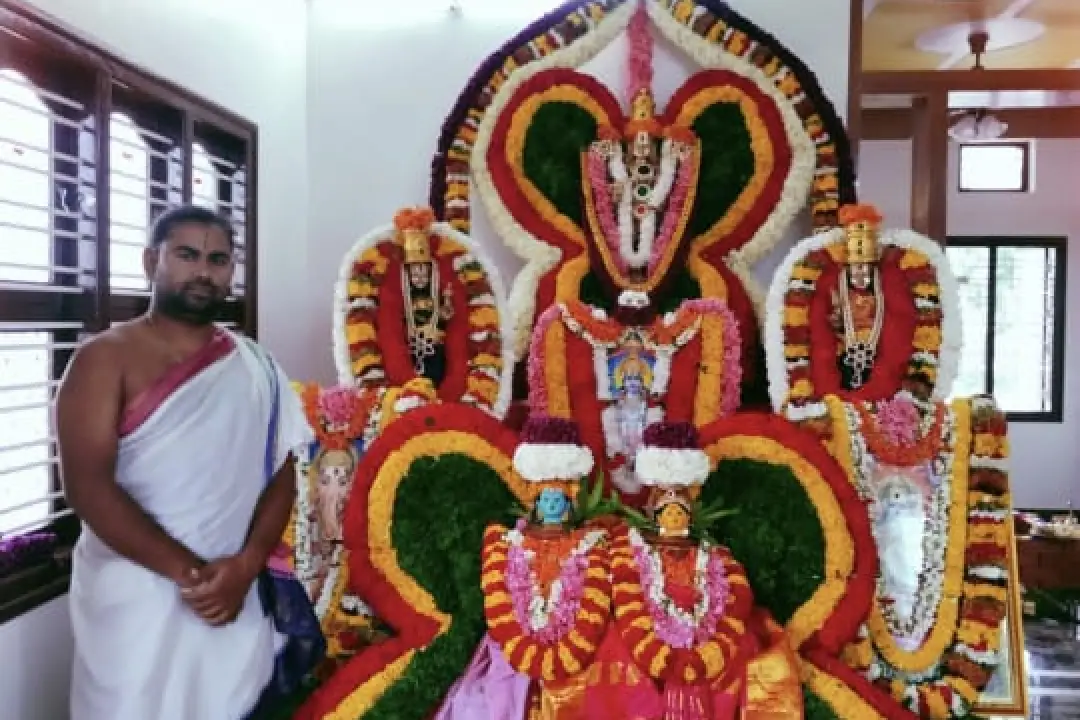
About Our Purohit — Prakash Purohit
With over 35 years of dedicated experience performing Vedic rituals in Srirangapatna, Prakash Purohit is a trusted name for families across South India. His expertise in Sarpa Dosha Pooja, Sarpa Samskara, and Naga-related rituals is rooted in deep study of the Atharva Veda and authentic Naga worship traditions passed down through his lineage.
Every ritual he performs is guided by complete devotion, authentic Vedic mantras, and a genuine commitment to helping families find peace and prosperity.
How to Book Sarpa Dosha Pooja in Srirangapatna
Booking your ritual is simple and straightforward:
- Call or WhatsApp us with your name and a brief description of your concern
- Share your horoscope or birth details if available — our purohit will confirm the Dosha
- We will recommend the most auspicious date for your ritual
- Arrive at Srirangapatna on the confirmed date — arriving the previous evening is advised
- The complete ritual is performed on the sacred banks of the Cauvery River
📞 Phone: +91 8147860917 📧 Email: prakashcpurohith@gmail.com 🌐 Website: srirangapatnaallpooja.com
Frequently Asked Questions (FAQ)
Q1. Can Sarpa Dosha Pooja be performed if I don’t have my horoscope? Yes. Our purohit can assess the need based on your family’s symptoms and history. A horoscope is helpful but not mandatory.
Q2. Do both husband and wife need to attend? For marriage and fertility-related issues, it is recommended that both partners attend. For individual horoscope-based dosha, the affected individual should be present.
Q3. Can Sarpa Dosha Pooja and Sarpa Samskara be performed on the same day? Yes, both rituals can be combined and performed in a single day under the guidance of an experienced purohit.
Q4. How soon will I see results after the ritual? Many families report experiencing positive changes within weeks to a few months. The ritual removes the karmic block — the results manifest as natural improvements in life circumstances.
Q5. Is this ritual only for Hindus from Karnataka? No. Families from across South India — Tamil Nadu, Andhra Pradesh, Kerala, Telangana, and even from abroad — regularly travel to Srirangapatna for these rituals.
Conclusion
Sarpa Dosha is one of the most deeply rooted karmic afflictions in Vedic tradition — but it is also one that can be completely resolved through authentic ritual performed with devotion and Vedic precision.
Srirangapatna, with its sacred Cauvery River and centuries-old tradition of Naga worship, is the most powerful place in South India to perform Sarpa Dosha Pooja and Sarpa Samskara.
Do not let this dosha continue to hold your family back. Take the step toward healing, peace, and prosperity today.
Book your Sarpa Dosha Pooja or Sarpa Samskara in Srirangapatna now.
📞 Call: +91 8147860917 🌐 Visit: srirangapatnaallpooja.com